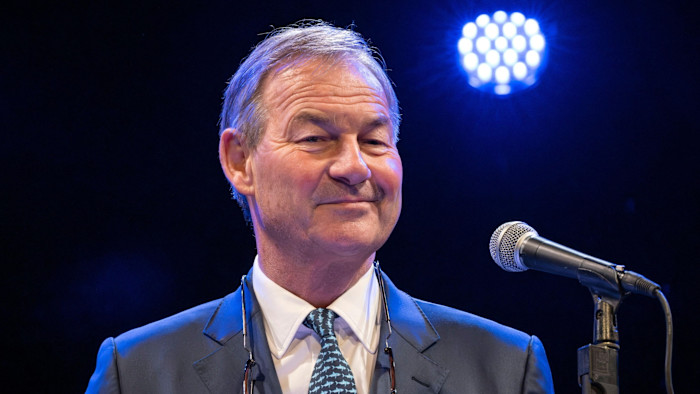
"The British right is fracturing"

The British right is fracturing between Nigel Farage’s Reform UK and Rupert Lowe’s Restore Britain, leaving many of their overlapping voters and activists caught between a larger populist vehicle and a smaller, harder-edged rival. The split, which began in early 2025 and hardened through 2026, has already shown up in by-elections, local contests and national polls, where Restore has drawn support mainly from former Reform voters without yet building a comparable organisation.
Lowe, the Great Yarmouth MP elected for Reform in July 2024, publicly criticised the party’s structure and Farage’s leadership in a March 2025 Daily Mail interview, describing Reform as “a protest party led by the Messiah” and questioning whether Farage would make a good prime minister. Days later, on 7 March 2025, Reform suspended the whip and reported Lowe to police. Party officials cited complaints from two female staff about bullying and alleged verbal threats against then-chairman Zia Yusuf.
Lowe denied the claims, called them vexatious and politically motivated, and pointed to leaked WhatsApp messages in which Farage described him as “contemptible” and said he was “damaging the party just before elections.” The Crown Prosecution Service later decided no charges would be brought. Lowe sat as an independent, launched Restore Britain as a pressure group in June 2025, and registered it as a party in early 2026. He remains its only MP.
Policy differences are real, even if both parties compete on immigration. Reform under Farage has pursued a hard line on illegal migration and net migration while seeking a broader coalition that includes former Conservative ministers such as Robert Jenrick and Suella Braverman.
Lowe and Restore have demanded more expansive measures: mass deportations framed in the millions (including, in some statements, people who are not illegal entrants), a ban on the burka, a referendum on restoring the death penalty, large welfare cuts, and the exclusion of recent Tory defectors from any future cabinet.
Restore’s spokesperson Charlie Downes has described Britain as “a people defined by indigenous British ancestry and Christian faith,” a formulation that has drawn accusations of ethnic nationalism. Farage has publicly rejected some of Lowe’s language on deportations of entire communities as going beyond what he considers reasonable, and has insisted he will not abandon allies to meet Lowe’s conditions.
Elon Musk amplified the rift by criticising Farage and praising Lowe on X in early 2025. Restore has attracted some figures and online supporters further to Reform’s right, including associations that Farage has treated as liabilities. In August 2026 Lowe publicly offered cooperation ahead of the next election if Reform accepted five conditions centred on deportations, cultural restrictions, the death-penalty referendum, spending cuts and cabinet exclusions.
Farage replied that he would build a “broad coalition” but would not turn his back on his team, and later made talks conditional on Lowe removing Downes amid rows over comments critics labelled antisemitic.
Lowe refused; both sides declared the prospect of a pact effectively dead. Farage has described Restore as splitting the right-wing vote; Lowe has argued that Reform waters down commitments and that voters deserve a clearer alternative.
The electoral effect is measurable but limited. In the Makerfield by-election Restore took 6.8 per cent; in the Greater Manchester mayoral contest it reached roughly 9 per cent of first preferences and finished ahead of the Conservatives.
Local affiliates such as Great Yarmouth First won council seats and, in Norfolk, helped deny Reform an outright majority. National polling in September 2026 placed Restore around 7 per cent—up from lower single digits—and taking about 15 per cent of those who voted Reform in 2024, according to BMG figures reported by The i Paper.
Three in five current Reform voters said they would consider Restore, while a similar share of Restore supporters would consider Reform, indicating substantial overlap rather than two wholly separate electorates.
Reform itself was polling in the low-to-mid 20s and trailing Labour. Analysts note that smaller parties are often squeezed in a general election, and Restore has so far shown limited capacity to win seats beyond Lowe’s own constituency, leading some Reform sources to liken the challenge to a vote-splitting risk that mainly benefits opponents.
Supporters sit in the middle of the argument. Many share priorities on immigration control, grooming-gang inquiries and scepticism of recent Conservative and Labour governments, yet they differ on how far policy should go, whether personality clashes matter, and which leader is more likely to deliver.
Online audiences, amplified by platforms such as X, have intensified the personal attacks. Farage’s calculation appears to be that broadening the tent and maintaining organisational scale offers the only realistic path to challenging Labour; Lowe’s is that only explicit, maximalist commitments will retain the most motivated voters and force the larger party rightward.
Attempts at unity have so far collapsed over both policy red lines and personal distrust dating to the 2025 suspension. Unless one side concedes ground or the other fades, the division is likely to persist into the next election cycle, with the practical consequence that votes on the right remain divided while the parties trade accusations of bad faith.